
Residential Solar Guide
☀️ Malaysia's Solar Guide 2026

Power Your Home.
Cut Your Bill.
Earn Solar Credits.

Everything you need to understand residential solar in Malaysia — Solar ATAP, SuRIA incentives, ROI, and real savings explained clearly.

Solar ATAP Approved RM 3,000 SuRIA Rebate ROI 4–7 Years 25+ Year Lifespan Trusted by Homeowners
Jump to a section
Scroll to Discover
☀️ Day 🌙 Night Solar generating!
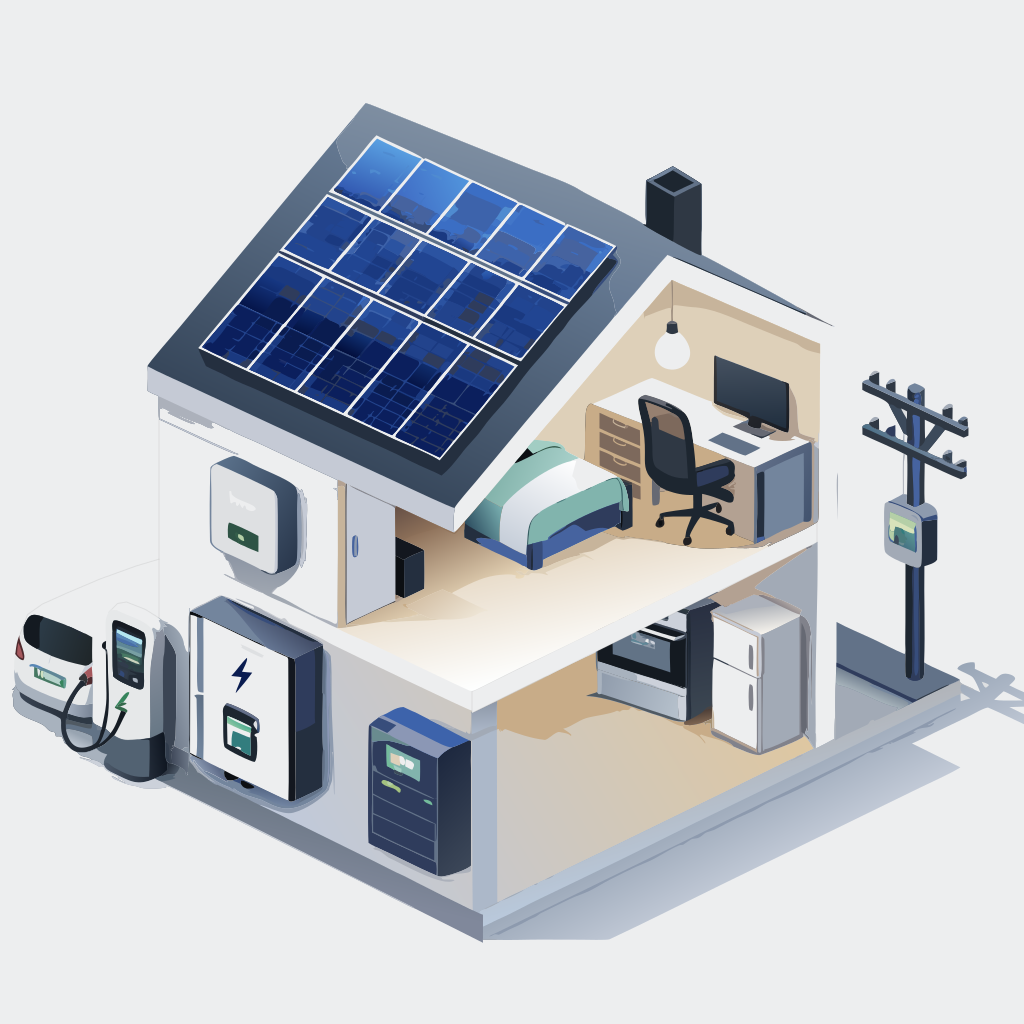
Solar home energy diagram ☀️ SOLAR PV SYSTEM Generates clean DC energy 🔄 INVERTER DC → AC Conversion 🔋 BATTERY STORAGE BESS — Night-time power 🔌 EV CHARGER Drive on sunshine 📋 DISTRIBUTION BOARD Powers all home circuits 🏠 HOME APPLIANCES Fridge, TV & all loads 📊 TNB METER Solar ATAP — SMP Credits 🏗️ TNB GRID Import / Export ENERGY FLOW LEGEND Solar Generation Electric Supply Excess → Grid Export ENERGY FLOW LEGEND Electric Supply Battery Supply Grid Import

How Solar Works

From sunlight to savings in six clean steps.

1
🔆

Solar Panel

Absorbs sunlight with photovoltaic cells, generating direct current (DC) electricity.

2

Inverter

Converts direct current (DC) to usable alternating current (AC) for your home.

3
🔌

Distribution Board

Distributes the converted AC electricity to power your home's appliances and circuits.

4
🏭

Excess Solar

Any surplus electricity is exported to TNB's grid, or stored in a battery if installed.

5
📊

ATAP Meter

A bidirectional meter records how much energy is imported from and exported to TNB.

6
🔋

Battery Storage

Optional. Unused energy captured during the day is stored for use at night or during outages.

Malaysia's New Residential Rooftop Solar Programme 2026

Generate your own electricity from sunlight, reduce your monthly TNB bill, and receive credits for excess energy exported to the grid.

How Solar ATAP Works

☀️

1. Solar Panels Generate Electricity

Your rooftop solar panels convert sunlight into electricity during the day.

2. Your Home Uses Solar First

The electricity generated is used immediately by appliances such as air conditioners, refrigerators, lights, TVs and other household devices.

💰

3. Reduce Your Monthly Electricity Bill

Every unit of solar energy you use directly is electricity you no longer need to buy from TNB.

🔄

4. Excess Energy Is Exported to TNB

If your solar system generates more electricity than your home is using, the surplus energy is automatically exported to the grid.

📊

5. Receive Solar ATAP Credits

Under Solar ATAP, exported energy earns bill credits that offset your electricity consumption for that month. Note: credits reset monthly and do not carry over — making correct system sizing important.

🏠

6. Continue Using Grid Power When Needed

At night or during low solar production periods, your home automatically draws electricity from TNB as normal.

Why Homeowners Choose Solar ATAP

💸 Lower Electricity Bills

Reduce your dependence on grid electricity by generating your own clean energy.

🔄 Export Excess Energy

Surplus solar generation can be credited through the Solar ATAP mechanism.

🛡️ Tariff Protection

Generate more of your own electricity and reduce exposure to future energy price fluctuations.

🌿 Clean & Sustainable

Reduce your household carbon footprint while contributing to Malaysia's renewable energy goals.

SuRIA Home — Cash Rebate Programme

Sustainable Rebate & Incentive Assistance (SuRIA) Home is a government programme to help residential customers reduce electricity costs through rooftop solar — with a direct cash rebate of up to RM 3,000.

Cash Rebate Rate

RM 600 / kWac

Up to a maximum of RM 3,000 per household. Paid directly into your bank account — actual cash, not a tax relief.

Deadline

31 Dec 2026

System must be commissioned under Solar ATAP and connected to TNB by this date. Programme also ends early if the 250 MW national quota is fully taken up — whichever comes first.

Total Allocation

RM 150 Million

Supports an estimated 45,000–50,000 homes and a cumulative 250 MW of installed residential solar. Programme ends when the quota or the deadline is reached — whichever comes first.

Notification

From Jun 2026

Eligible customers will be notified via their TNB-registered email in phases from 1 June 2026 to submit bank details.

✅ Who Is Eligible?

TNB individual customers on Domestic Tariff (excluding companies)
Solar ATAP installation commissioned by 31 Dec 2026
Malaysian citizen
No prior cash rebate received under the SolaRIS programme

* Each customer is entitled to only ONE rebate.

📋 How to Apply — 9 Steps

1Customer plans to install rooftop Solar PV at their residential premises.
2Customer appoints a Registered PV Service Provider (RPVSP) for Solar PV installation and Solar ATAP application. Find one at seda.gov.my/rpvsp
3RPVSP installs the Solar PV system for the customer.
4Customer signs Solar ATAP contract upon installation. TNB meter replacement is carried out if applicable.
5Customer receives email from TNB confirming they have joined Solar ATAP.
6Customer is notified via email on SuRIA Home eligibility. RPVSP is also notified.
7Customer fills in the SuRIA Home application form with full name, NRIC, bank name & account number, and signs the declaration.
8Customer receives a SuRIA Home cash rebate confirmation email. Rebate transferred within 7 working days.
9Customer receives email notification on successful cash rebate transfer to their bank account. 🎉
ℹ️ For more information visit mytnb.com.my or contact TNB CareLine at 1-300-88-5454.

Real Savings Examples

See how typical Malaysian homes perform after going solar — broken down by system size.

ParameterDetail
Home sizeSingle-storey, ~1,200 sq ft
Monthly bill (before)RM 120–180
System size4 kWp
Estimated costRM 14,000–18,000
Monthly savingsRM 80–110
Annual savingsRM 960–1,320
Payback period12–15 years
System lifespan25+ years
Net lifetime savings~RM 10,000–18,000
ParameterDetail
Home sizeDouble-storey, ~1,800 sq ft
Monthly bill (before)RM 280–400
System size8 kWp
Estimated costRM 26,000–34,000
Monthly savingsRM 180–250
Annual savingsRM 2,160–3,000
Payback period9–12 years
System lifespan25+ years
Net lifetime savings~RM 25,000–45,000
ParameterDetail
Home sizeBungalow, 3,000+ sq ft
Monthly bill (before)RM 500–800+
System size12 kWp
Estimated costRM 38,000–50,000
Monthly savingsRM 350–520
Annual savingsRM 4,200–6,240
Payback period7–10 years
System lifespan25+ years
Net lifetime savings~RM 55,000–100,000
4–5h
Average peak sun hours/day in Malaysia (varies by location)
80%
Panels still perform at 80% after 25 years
~0.5%
Annual panel degradation rate
Zero
Moving parts — virtually no maintenance cost

Things homeowners commonly ask before making the switch.

Straight answers to the questions we hear most often.

No. Properly installed systems use engineered mounting structures designed for Malaysian roofs, with professional waterproof sealing and installation practices to prevent leakage issues.
Standard grid-tied solar systems automatically shut down during blackouts for safety compliance. Adding a battery system allows essential appliances to continue running during outages.
Battery systems are ideal for homeowners who want backup power, use more electricity at night, own an EV, or want greater energy independence from future tariff increases.
Yes. Many homeowners size their solar systems with future EV charging in mind, helping offset charging costs and reduce long-term electricity expenses.
Solar panels still generate electricity during cloudy weather, just at reduced output. System designs already account for Malaysia's seasonal weather and annual solar conditions.
Most Tier-1 solar panels come with a 25-year performance warranty, guaranteeing at least 80% of original output. Many continue producing electricity well beyond that, making them a long-term investment even in Malaysia's tropical climate.
The solar system remains attached to the property and can become a value-add for future buyers. Ownership and warranty transfers can typically be arranged during the sale process.
Yes. Many systems can be designed with future expansion in mind, especially for growing households, additional air-conditioning, or future EV ownership.
Solar systems require minimal maintenance. Occasional cleaning and periodic inspections help ensure the system continues operating at optimal performance.
Yes. Rising electricity tariffs and increasing energy demand continue to make solar one of the most effective long-term ways to reduce household energy costs.